
You Never Hear the Same Song Twice

There is no such thing as hearing the same song twice.
There is hearing the same recording again. There is recognizing the same melody, the same chorus, the same lyric, the same piano chord, the same guitar part, the same drum fill, or the same voice. But the actual experience of hearing music is rebuilt every single time it happens.
A song may seem fixed, especially if it is a recording on Spotify, Apple Music, YouTube, or a file sitting on your computer. But music is not only the file. Music is the sound source, the speaker, the room, the air, the listener’s body, the listener’s memory, and the exact moment when all of those things meet.

That may sound philosophical, but it is physically true. Sound is not an object sitting in front of us. Sound is vibration moving through a medium, usually air, as changing pressure. Those pressure changes reach the ear, vibrate the eardrum, move through the tiny bones of the middle ear, and eventually become signals the brain can interpret. Hearing is not a simple copy of the outside world. It is a physical and neurological process.
So when we say we “hear a song,” we are really talking about a chain of events. Something vibrates. The air responds. The room shapes it. The ear receives it. The brain rebuilds it. Memory gets involved. Expectation gets involved. Emotion gets involved. The body gets involved.
That means music is never only “the song.” It is always the song happening somewhere, through something, to someone, at one exact moment.
A recording can be fixed. A written piece of music can be fixed. A file can be copied perfectly from one device to another. But listening is not fixed. Listening is an event, and events do not repeat perfectly.
Before going too far into the idea, it helps to get the basic science language clear. Frequency is how many times a wave cycles per second. That is one of the main reasons we hear one sound as higher or lower than another. A440 means the sound wave cycles 440 times per second. Amplitude is the strength or size of the pressure change, which connects to loudness. Wavelength is the physical distance between repeating points in the wave. The speed of sound is different from all of that. In normal air, different pitches are not traveling at meaningfully different speeds. The speed depends much more on the medium and conditions like temperature.
Then there is timbre, which is why a piano, guitar, flute, and voice can all play the same note and still sound completely different. Timbre is the character of the sound. It comes from the shape of the wave, including harmonics, overtones, envelope, and the way those pieces interact. That is why a note is never only its pitch. A middle C on a piano and a middle C sung by a human voice may share the same basic frequency, but they are not the same sound.
Once that clicks, music gets much bigger.
A piano note is not just “A.” It is a hammer, a string, a soundboard, a pedal position, a room, and a player’s hand meeting for one moment. A guitar chord changes with finger pressure, pick angle, string age, amp response, speaker movement, pedals, cables, and room placement. A drum hit changes with stick angle, head tension, rim contact, shell resonance, rebound, microphone placement, and room reflections. A voice changes with breath, posture, hydration, emotion, fatigue, vowel shape, throat tension, confidence, and mood before it ever reaches the listener.
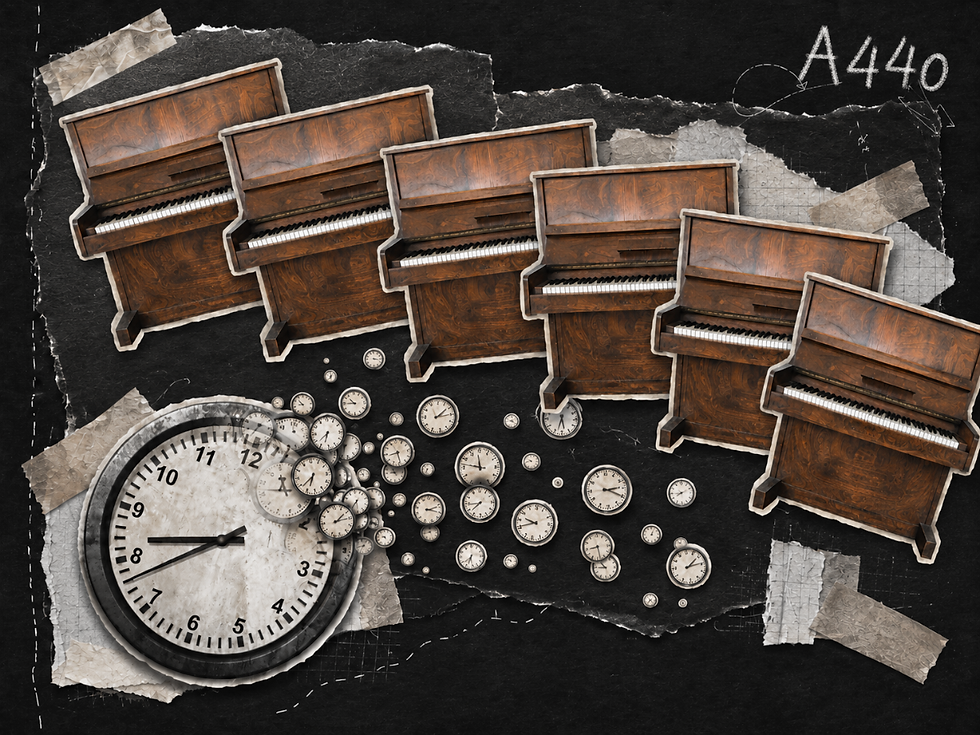
That is not a flaw in music. That is music.
This is one of the reasons live performance matters. A performance is not a duplicate of a song. It is a temporary version of it. Even if a musician plays the same set list every night, even if the arrangements are rehearsed carefully, even if the band is incredibly consistent, the performance is still not the same thing twice.
The player’s body cannot fully repeat itself. The room cannot fully repeat itself. The audience cannot fully repeat itself. The emotional condition of the night cannot fully repeat itself.
A live performance is not a copy. It is a meeting.
Recordings make this harder to notice, but they do not escape it. A streamed song may feel fixed because the file itself is fixed. If you play the same track twice from the same phone through the same speaker at the same volume, your everyday brain says, “That is the same song.” And for normal life, that is true enough. Nobody needs to turn every playlist into a physics crisis.
But if we look closer, the listening event still changed. The digital file may be the same, but the sound has to become physical again. It passes through conversion, amplification, speaker movement, air, room reflections, and ears. A piano through phone speakers is not the same piano through studio monitors. A synth bass through earbuds is not the same synth bass through a full PA with subs. A vocal in a dry studio mix is not the same vocal once it is pushed through a kitchen speaker while the dishwasher is running.
The medium matters because the sound has to come out of something. A guitar in a bedroom is one event. That same guitar through a microphone, mixer, EQ, compression, reverb, amplifier, speaker, and reflective room is another event. The song may be the same in a casual sense, but the actual sound reaching the listener is not.
Then the room gets involved, and the room is a much bigger part of music than most people realize.
A song in an empty room is not the same song in a crowded room. People absorb sound. Seats absorb sound. Walls reflect sound. Glass, carpet, concrete, curtains, ceiling height, room shape, temperature, humidity, stage placement, and speaker placement all affect what reaches the listener. Audience size and placement can change sound levels, clarity, bass response, and reflections in a hall.
That means the audience is not just watching or listening. The audience is acoustically inside the performance.
A quiet recital hall is one kind of instrument. A coffee shop is another. A restaurant with chatter, silverware, espresso machines, footsteps, doors opening, and side conversations is another. An outdoor show with wind, traffic, humidity, insects, and no back wall is another.
The same singer can sound intimate in one room, swallowed in another, too bright in another, and perfectly balanced in another. The same piano can sound warm, muddy, sharp, distant, or huge depending on the space.
Musicians and sound engineers learn this quickly, sometimes painfully. You can soundcheck in an empty room and everything feels clear. Then people arrive, and the room changes. You can rehearse in a small practice space and feel massive, then get on a wide stage and suddenly the band feels spread out and disconnected.
The space is not just holding the sound. The space is participating in the sound.
Then, after the instrument, speaker, room, crowd, and air have all done their work, the sound still has to enter one specific human body. And that body is not neutral.
Every listener has a different position. One person is closer to the left speaker. One person is under a balcony. One person is standing behind someone tall. One person is near the drums. One person is next to a loud talker. One person hears too much bass because they are near a wall. Another person misses the bass because of where they are standing.
Even before the brain interprets anything, the body changes what arrives. The shape of the head, torso, ear canal, and outer ear affects how sound reaches the eardrum. In spatial hearing, this is part of what head-related transfer functions describe: the body and outer ear filter sound before it reaches the inner ear, and that filtering varies from person to person.
So two people standing next to each other are not hearing exactly the same show. They are hearing overlapping versions of the same event.
One person has mild hearing loss. One person has congestion. One person is tired. One person has earplugs in. One person is focused on the lyrics. One person is listening to the bass line. One person is a drummer and cannot stop tracking the hi-hat. One person is a singer and hears every breath. One person is a parent watching their child perform. One person is suddenly thinking about a memory from twenty years ago because the song found a door they forgot was there.
The listener is not just receiving music. The listener is completing it.
That is where this becomes useful for music education. A student might think they are only trying to “play the song correctly,” and of course accuracy matters. Notes matter. Rhythm matters. Technique matters. But music is not only accuracy. Music is perception, control, intention, and awareness.
The same piece feels different after a student has lived with it for a week. The hands understand more. The ear notices more. The brain predicts more. The student starts hearing the phrase instead of simply surviving the notes.
This is why repetition in music is so misunderstood. From the outside, repetition can look boring. A student plays the same measure again, then again, then again. A singer repeats the same line. A guitarist loops the same chord change. A pianist goes back to the left-hand part that keeps falling apart.
It can feel like nothing is happening because the material is technically “the same.”
But it is not the same.
The first run-through is often survival. The second is recognition. The tenth is control. The fiftieth is interpretation. The hundredth is where the student starts to sound like themselves.
That is not meaningless repetition. That is relationship-building. The student is learning the music, but the student is also becoming a different listener to the music.
The mind changes the song because familiarity changes perception. The first time you hear a song, your brain is trying to locate the shape. Where is the beat? Where is the vocal? Is this verse going somewhere? Is that the chorus? Is this familiar? Is this strange? Do I trust this?
The second time, the song has already entered memory. Now you hear the opening differently because you know where it leads. You anticipate the chorus. You notice the bass movement. You catch a lyric that passed by the first time. You hear the setup because you know the arrival.
Music familiarity affects how the brain responds to music, including emotional, reward, memory, and attention-related responses. Familiar music and unfamiliar music are not processed the same way.
Sometimes a song feels better after a few listens because the song did not change. You changed. Your brain built a map. Once the map exists, you can move through the song differently. You are not just being hit by sound anymore. You are recognizing a place.
Imagine hearing a song for the first time on your phone in the car on the way to a show. You do not know it yet. Maybe you like it. Maybe you are unsure. Maybe one part catches you, but you do not know why.
Then you get to the show, and the band opens with that song.
That second hearing is not just “the same song again.” Now the phone version and the live version collide in your mind. You recognize the chorus. You compare the singer’s live voice to the recording. You feel the kick drum in your body instead of hearing a tiny version through your car speakers. You attach the drive to the venue. You attach the venue back to the drive.
The song has already started building a memory structure around itself.
You are literally hearing more of it because you have already heard it once.
That sounds simple, but it is huge. We often talk about listening as though sound enters us cleanly and we either like it or dislike it. But listening is active. The brain predicts, compares, sorts, remembers, and attaches meaning.
Music does not just happen to us. We participate in it.
A simple sine wave can show the whole idea in miniature. Play an A440 sine wave for exactly five seconds. Pause. Then play it again. On a normal level, most people would say, “That was the same sound twice.” Same pitch. Same speaker. Same volume. Same room.
Fair enough. But it was not truly the same event.
The speaker cone moved during the first tone. The air in the room moved. The listener’s ear was stimulated. The brain heard the sound once, which means the second tone cannot be heard as the first exposure. The listener’s breathing changed. Their posture changed slightly. Their expectation changed. The room did not reset. The body did not reset. The mind did not reset. Time did not reset.
The second A440 is not the first A440. It is a second event that strongly resembles the first.
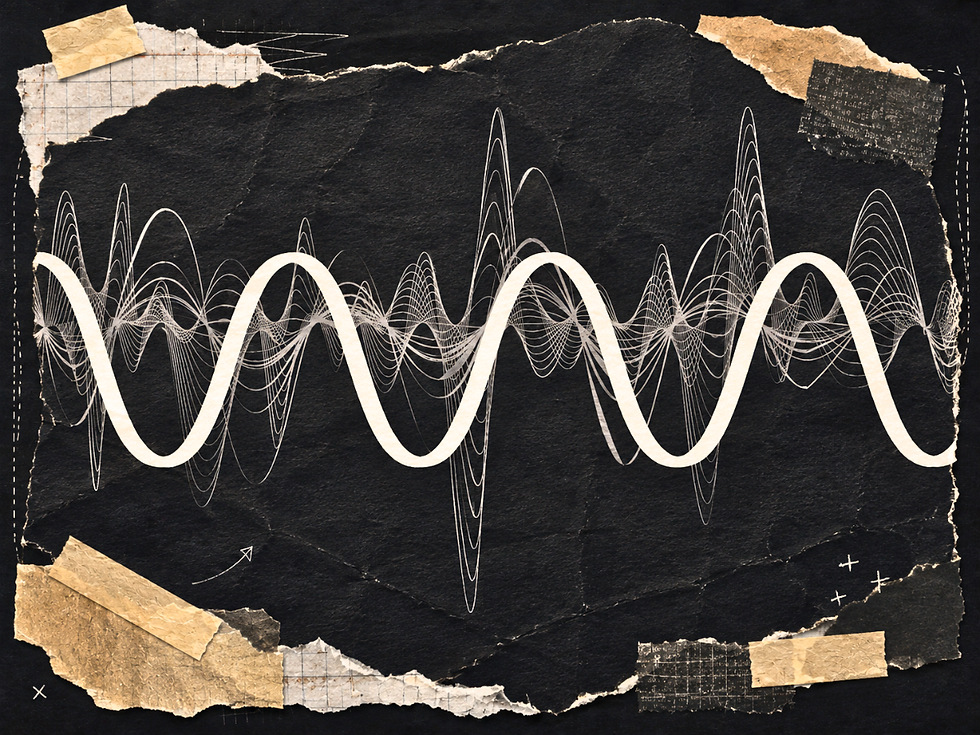
That small distinction changes how we think about music. The world does not give us perfectly repeatable musical objects in the way we casually imagine. It gives us musical events. Some are extremely similar. Some are carefully controlled. Some are recorded and replayed with incredible precision. But the human act of hearing them is new each time.
This also explains why people say, “I wish I could hear this song for the first time again.”
What they usually mean is not just that they want to hear the song. They can do that anytime. What they want is to meet the song before it became part of them. They want the first surprise. The first chorus. The first shock of recognition. The version of themselves who did not yet have memories attached to it.
That is impossible in the obvious way. Once a song enters you, it becomes part of your listening history. You cannot unknow it. You cannot erase the first time. You cannot become the earlier version of yourself who had not heard it yet.
But there is another side to that. You never hear the song the same way twice.
You cannot hear it again for the first time as the same person, but you are also never the same person hearing it again. You are older, even if only by a few seconds. Your body state is different. Your memory state is different. Your mood is different. Your attention is different. Your relationship to the song is different.
The song may be familiar, but the meeting is always new.
That matters deeply for students. Practicing the same song is not just trying to force the same result over and over. It is learning to notice more each time. It is learning how your hands respond today. It is hearing what your ear missed yesterday. It is feeling how the rhythm changes when you are tired, excited, nervous, or more confident. It is learning how the beginning changes once you understand the ending.
A beginner may play a song and hear mostly mistakes. A more experienced student may hear structure. A performer may hear phrasing. A composer may hear form. A producer may hear texture. A singer may hear breath. A drummer may hear pocket. A teacher may hear potential.
The sound may be similar, but attention changes the experience.
That is one of the biggest reasons music education is not just about “getting good.” It is about becoming more awake to sound. A good lesson does not only teach a student where to put their fingers. It teaches them what to listen for. It teaches them how to notice small differences. It teaches them that a phrase can be technically correct and still not feel finished. It teaches them that the same note can be played stiffly, gently, nervously, confidently, beautifully, or carelessly.
Once a student starts hearing those differences, music becomes more alive. A scale is not just a scale. A chord is not just a chord. A song is not just a song. Each sound has shape, weight, color, timing, and intention.
The student starts to understand that music is not simply produced. It is shaped. And the listener is part of the shaping.
This is why live music still matters in a world where almost every recording is instantly available. We can hear polished, beautifully mixed music any time we want. That is amazing. But a live performance gives us something a recording cannot fully give: the awareness that this version is happening now, with these people, in this room, under these conditions, and then it will be gone.
It is also why student recitals matter. A recital is not just a student proving they practiced. It is a musical event that will never exist in exactly the same way again. The student’s nerves are part of it. The room is part of it. The family sitting there is part of it. The little pause before starting is part of it. The recovery after a mistake is part of it. The applause is part of it.
The whole thing is a real moment, not a perfect object.
That can take pressure off. If no performance can be perfectly repeated, then the goal is not to create a flawless museum piece. The goal is to be prepared, aware, and present enough to make music honestly in that moment.
Every time sound happens, it enters a new version of the world. Every time we listen, it enters a new version of us. That is true for a symphony, a pop song, a jazz standard, a beginner piano piece, a voice lesson warmup, a guitar chord, a drum groove, or a five-second sine wave.
So the next time you listen to your favorite song, remember this: the song may be familiar, but this version of you, in this room, on this day, with this memory, this body, this mood, this attention, and this exact moment in time, has never heard it before.


Comments